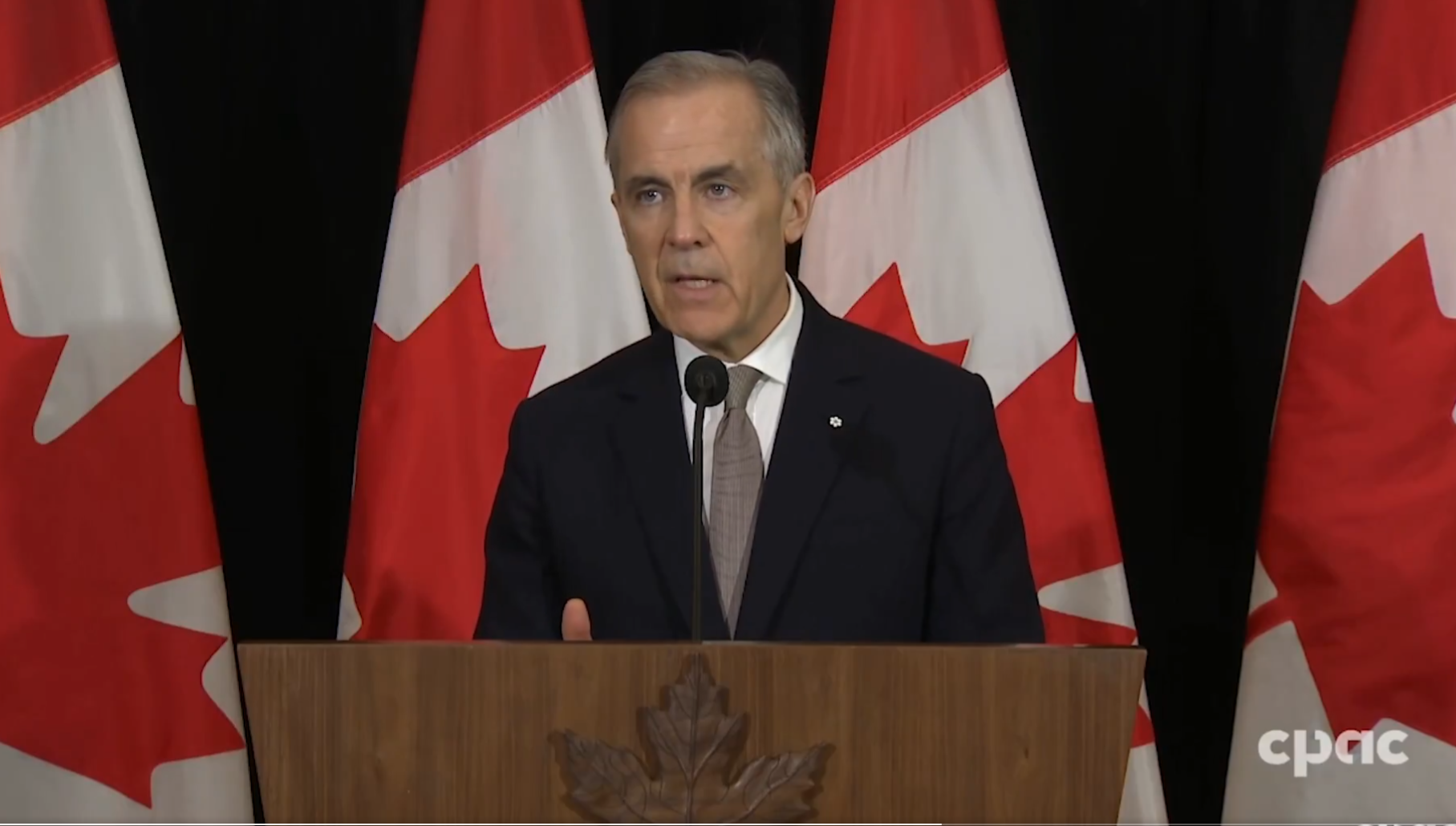
Canadian Prime Minister Mark Carney says he supports military strikes against Iran "with regret" following a failure of international diplomacy.
Speaking to reporters in Sydney, Mr Carney said Canada has long supported the need to neutralise the threat posed by the Iranian regime. However, he criticised the United States and Israel for launching the operation without engaging the United Nations or consulting international allies. Iran responded to the initial strikes by firing missiles and drones at Israel and allied Gulf states.
The Prime Minister’s recent comments suggest a shift in tone from the early stages of the military intervention. The news outlet Drop Site highlighted how the Prime Minister’s current stance differs from his initial reaction to the conflict:
A failure of the international order
Mark Carney says that the military action taken by the U.S. and Israel appears to be inconsistent with international law.
"While Canada was not asked to participate, prima facie it appears that these actions are inconsistent with international law." pic.twitter.com/SWYVQZ2r05
— Harrison Faulkner (@Harry__Faulkner) March 3, 2026
Mr Carney described the current conflict as an example of the failure of the international order. He told reporters that while he regrets the situation, he views the Iranian government as a "massive threat" to global security. The Prime Minister alleged the regime has murdered many Canadians and remains the world’s largest exporter of terrorism.
He specifically pointed to Iran’s nuclear ambitions as a primary justification for the military action. "Nobody has a civil nuclear programme that’s buried a mile beneath the desert," Mr Carney said. A civil nuclear programme refers to the use of nuclear technology for peaceful purposes, such as generating electricity, rather than for weapons.
Fears of ground intervention
In Washington, Democratic senators have expressed alarm following a classified briefing on the US-Israeli war with Iran. Lawmakers warned that the Trump administration lacks clear objectives for the military campaign. Some senators stated they fear the lack of a defined strategy could lead to a prolonged conflict involving US ground troops.
The briefing has intensified concerns among lawmakers regarding the potential for "boots on the ground." This term refers to the deployment of infantry and land forces rather than relying solely on air strikes or naval operations. International reactions have also been noted elsewhere, with reports of protests in Venezuela against the military campaign.
Repairing ties with India
During his Indo-Pacific tour, Mr Carney also held what he described as "frank" discussions with Indian Prime Minister Narendra Modi. The meeting follows a period of strained relations between the two countries under the previous government of Justin Trudeau. Canadian officials stated they believe India is no longer linked to violent criminal activity on Canadian soil.
However, some members of the Canadian Sikh community have rejected this assessment. They told reporters they continue to face threats from India, an allegation that officials in Delhi have consistently denied. Mr Carney defended the engagement, stating that leaders must be able to talk to countries directly to ensure cooperation on security risks and cross-border crime.