Canadian consumers and businesses are facing increased financial pressure as global oil prices fluctuate due to military conflict in the Middle East. Energy analyst Rory Johnston said the price of oil recently swung between $83 and $119 per barrel within a single day. This volatility is driven by the ongoing war involving Iran and its potential impact on international shipping routes.
The Strait of Hormuz serves as a critical chokepoint for the global energy trade. GasBuddy petroleum analyst Matt McClain said 20 percent of the world supply of oil passes through this waterway. Any disruption to this route forces every country to pay more for crude oil regardless of their domestic production levels.
Global Markets Dictate Domestic Costs
Higher oil prices should be an opportunity for Canada.
We have the 4th-largest oil reserves in the world, and our allies are asking for reliable energy. Instead, Liberals keep blocking pipelines and driving investment away with higher carbon taxes and more red tape.
Maybe if a… pic.twitter.com/TgD5xbmC2L
— David Bexte (@davidbexte) March 10, 2026
Canada remains vulnerable to these price swings despite its status as a major energy producer. Natural Resources Canada reports the country is the fourth-largest oil producer in the world. It holds 163 billion barrels of proven oil reserves. The majority of these reserves are located in the oil sands.
Domestic abundance does not shield Canadians from international price hikes. McClain said the surge in petroleum prices is a direct result of the conflict preventing oil tankers from accessing the Strait of Hormuz. Because oil is a globally traded commodity, Canadian refineries must pay the prevailing market rate to acquire crude.
The distribution of Canadian oil also limits its impact on local prices. Natural Resources Canada data shows that 97 percent of Canadian crude oil exports went to the United States in 2023. This leaves domestic markets reliant on global pricing structures determined by international supply and demand.
Economic Consequences for Transportation and Food
Rising fuel costs have a cascading effect on the broader Canadian economy. Johnston said higher oil prices increase the cost of transportation, freight, and food. These expenses often lead to prolonged supply shortages even if the initial cause of the disruption is resolved.
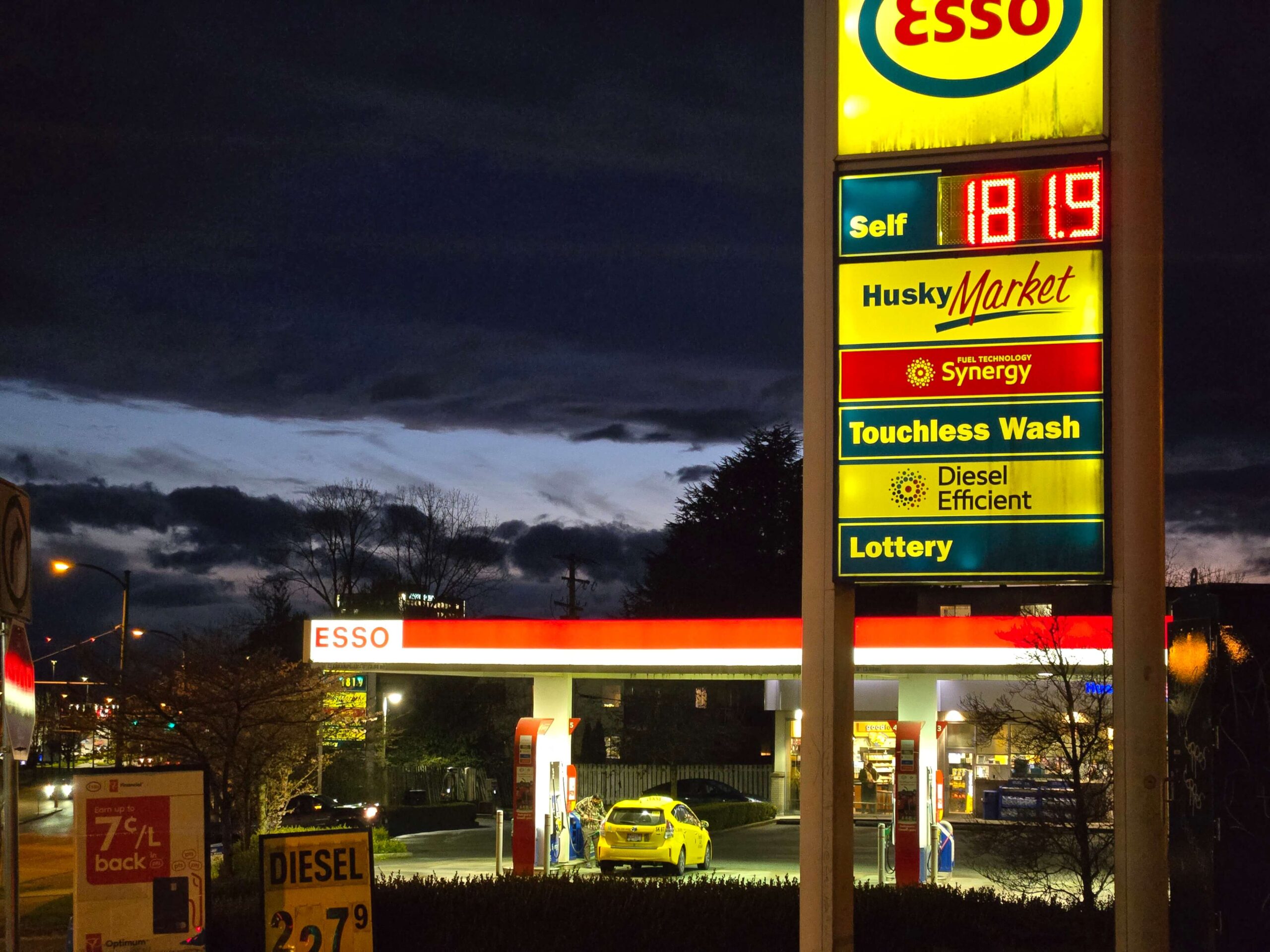
Individual Canadians are reporting significant changes to their spending habits. Toronto resident Scott Low said his 30-minute commute now costs $600 in diesel fuel per week. Another resident, Nishtha Patel, said she has reduced her travel because filling her gas tank has become too expensive.
McClain said gasoline prices in Toronto could rise by another 10 to 25 cents per litre in the near term. He also predicted that diesel prices could increase by as much as 37 cents this week. These increases contribute to higher inflation rates across the country.
The Baumol Effect and Service Inflation
The rising cost of living in Canada is also influenced by economic theories regarding productivity. One such theory is known as the Baumol Effect or Baumol’s Cost Disease. It explains why the price of services continues to rise even when technology makes manufactured goods cheaper.
The theory uses a string quartet as a primary example. It still takes four people 40 minutes to perform a piece of music in 2025. This represents zero productivity increase in music production over several centuries.
Industries with stagnant productivity must still raise wages to compete with high-productivity sectors like manufacturing. This forces the cost of services like haircuts, dog grooming, and live performances to increase over time. These rising costs for services combine with high energy prices to strain household budgets.
Mitigation and Future Outlook
Experts suggest that drivers take specific steps to improve fuel efficiency during this period of high prices. Matt McClain said maintaining a clean air filter and getting regular oil changes can help maximize fuel economy. He also noted that driving at the proper speed limit can save a motorist between 25 and 35 percent on fuel efficiency.
The federal government and provincial authorities share responsibility for energy development in Canada. While provinces have jurisdiction over resources within their boundaries, the federal government manages trade and environmental protection. These bodies continue to monitor the impact of global volatility on the domestic energy sector.
Rory Johnston said the duration of the current oil shock depends on how long the war in Iran continues. There are currently no signs that the Strait of Hormuz will reopen to normal traffic soon. This suggests that high energy costs may persist for the foreseeable future.
Every country, everywhere is paying more in crude oil prices as a result of this conflict.
- Canada is the world’s fourth-largest oil producer.
- Ninety-seven percent of Canadian oil exports go to the United States.
- The Strait of Hormuz handles 20 percent of global oil supply.
- Service costs rise due to the Baumol Effect despite lack of productivity gains.