Canadian prime minister seeks to mend ties, expand trade and diversify strategic partnerships — even as U.S. tensions loom
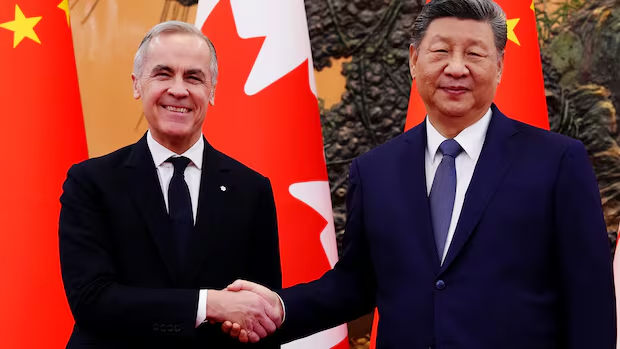
Beijing / Ottawa — Canadian Prime Minister Mark Carney met with Chinese President Xi Jinping in Beijing this week, marking the first visit by a Canadian prime minister to China in nearly a decade and signalling a concerted effort to recalibrate bilateral relations after years of strain between the two governments.
The visit comes amid shifting global trade dynamics and a broader rethink of Canada’s economic and diplomatic strategy in light of recent tensions with key partners — particularly the United States under President Donald Trump’s “America First” agenda.
“New era” of cooperation, cautiously framed
Carney described the engagement with China as a renewal of bilateral relations that could yield “historic” gains, especially in sectors such as agriculture, energy, agri-food and finance, and reduce Canada’s heavy reliance on the U.S. market for exports.
Both Ottawa and Beijing signed initial cooperation agreements covering energy, cultural exchanges, crime prevention, forest management and food safety, with plans for regular policy dialogues in key areas.
Chinese officials emphasised the symbolic importance of the visit, highlighting expanded economic engagement and urging Canada to pursue a more independent foreign policy — distinct from strict alignment with Washington.
Trade and tariff disputes linger
While both sides expressed willingness to deepen cooperation, concrete progress on longstanding tariff disputes remains limited. Under former Canadian prime minister Justin Trudeau, Canada imposed steep tariffs on Chinese-made electric vehicles and metals, prompting China to hit back with duties on Canadian agricultural exports — notably canola, seafood and other commodities.
Analysts note that China remains Canada’s second-largest trading partner, but total trade value still pales in comparison to Canada’s economic ties with the U.S. — highlighting both opportunity and constraint in expanding Beijing ties.
U.S. response and political sensitivities
Carney’s outreach to China arrives during a period of strained Canada–U.S. relations, with Trump administration tariffs and provocative rhetoric about Canada’s economic sovereignty — at one point suggesting Canada could become the U.S.’s “51st state.”
Some Canadian commentators and experts argue that a perceived pivot toward Beijing could provoke Washington or complicate negotiations over the Canada-U.S.-Mexico trade pact (CUSMA) — especially if Canada appears to ease tariffs on Chinese goods without consulting U.S. partners.
Others, however, see diversification as a necessary response to an unpredictable U.S. trade policy environment, arguing that expanding trade partnerships is a pragmatic hedge against volatility.
Domestic political context
Carney, who took office less than a year ago, ran on a platform that included standing up to external economic pressures and strengthening Canada’s global trade footprint beyond its traditional reliance on the U.S. market.
Nonetheless, public opinion remains mixed on closer ties with China — particularly in light of longstanding concerns over human rights, election interference and security issues — even as economic and geopolitical pressures push Ottawa toward strategic diversification.
What We Know
- Historic visit: First Canadian prime ministerial trip to China since 2017.
- Broad cooperation agreements signed in energy, crime prevention, culture, forestry and food safety.
- Trade tensions persist due to tariffs on EVs and agricultural products.
- Canada seeks diversification amid U.S. protectionist pressures under President Trump.
- Xi and Carney stress renewed partnership in agriculture, finance and energy.
What’s Unclear or Disputed
- Whether tariffs will be meaningfully reduced this visit.
- How far Canada will tilt away from long-standing U.S. alignment.
- Domestic political reception to deeper ties with China remains divided.
Why It Matters
Canada’s diplomatic and trade choices in Beijing could reshape its role in the rapidly shifting global economy — balancing relations with the world’s two largest economies while managing domestic pressures and geopolitical risks.
Image Source: CBC