OTTAWA — Prime Minister Mark Carney is rejecting a senior U.S. official’s claim that he “walked back” his high-profile Davos speech after speaking with President Donald Trump, framing the dispute as part of a widening test of Canada’s economic and diplomatic room to manoeuvre as Washington escalates tariff threats and pressure over Canada’s trade direction.
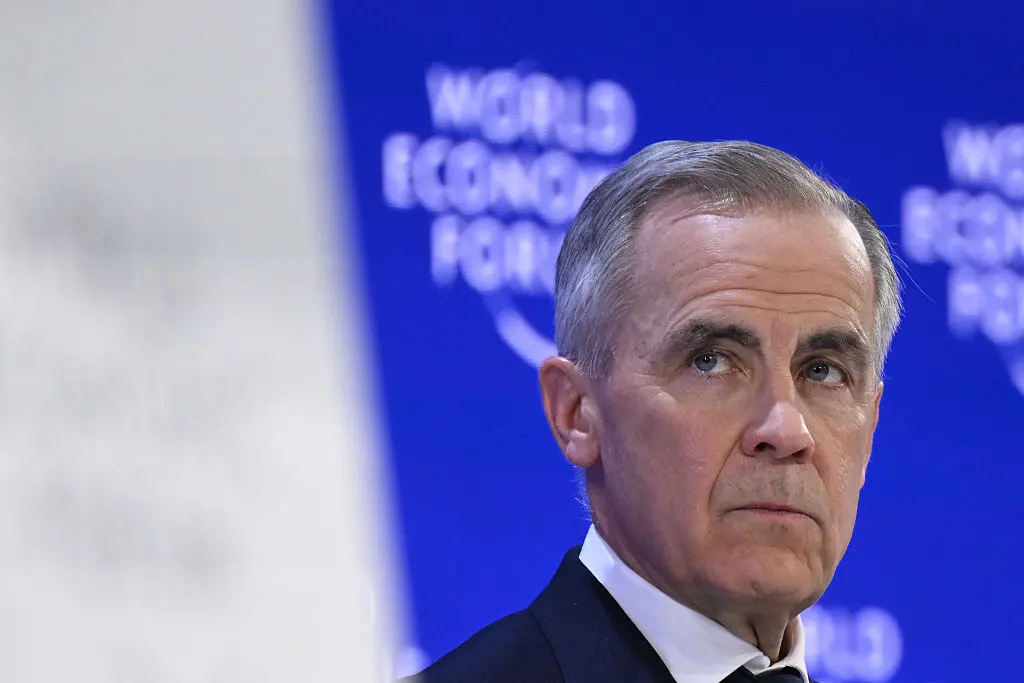
The flashpoint is Carney’s Jan. 20 address at the World Economic Forum in Davos, where he argued that the old assumptions underpinning global stability and prosperity no longer hold and warned of a “rupture” in the world order, while denouncing “American hegemony” without naming Trump directly.
After U.S. Treasury Secretary Scott Bessent said on U.S. television that Carney was “very aggressively” walking back his Davos remarks during a conversation with Trump, Carney publicly rejected that account on Parliament Hill. “To be absolutely clear — and I said this to the president — I meant what I said in Davos,” Carney said.
Carney also described the call with Trump as a “very good conversation,” even as the two leaders’ relationship has turned into a public back-and-forth that has drawn attention beyond Canada’s borders.
How the dispute escalated
Carney’s Davos remarks prompted a sharp response from Trump during his own appearance at the forum. Trump told the audience that “Canada lives because of the United States,” adding: “Remember that, Mark, next time you make your statements.”
Since then, the U.S. president has taken a series of steps and made threats that have raised the temperature in Ottawa, including warning of a 100 per cent tariff on Canadian imports if Canada proceeded with a trade deal with China and publicly criticizing Canada’s trade posture.
Bessent’s claim that Carney softened his Davos position came after the prime minister and president spoke by phone, with Carney insisting he reiterated his stance rather than retreating from it.
Domestic politics: approval bump, tight party race
The dispute appears to be resonating with Canadians. A poll released Monday by the Angus Reid Institute found Carney’s approval rose eight points to 60 per cent, the highest rating reported for him since he became prime minister in March.
At the same time, the same polling snapshot showed the governing Liberals holding only a narrow edge over the Conservatives, underscoring that a personal boost for the prime minister does not automatically translate into a decisive advantage for his party.
- Carney says he did not retract his Davos remarks and told Trump he “meant what I said.”
- A U.S. cabinet official says Carney “walked back” the comments during a call.
- An Angus Reid poll shows Carney’s approval at 60 per cent, up eight points.
- Canada’s strategy centres on reducing reliance on the U.S. market while preparing for a major North American trade review.
Background: tariffs, trade dependence and the “middle powers” pitch
At the heart of the clash is Canada’s dependence on the U.S. market and Washington’s leverage over it. Reporting on the dispute notes that roughly 70 per cent of Canada’s exports go to the United States, giving any tariff threat immediate economic and political weight in Canada.
Carney’s Davos argument was that countries like Canada cannot assume security and prosperity will be protected by geography and alliances alone, and that “middle powers” need to co-operate more closely when larger states use economic tools as pressure points.
He has reiterated that Canada is open to negotiating its relationship with the United States, but says the country must stay the course in shifting away from trade dependency on a single partner.
In parallel, Carney has pointed to a broader push to diversify commercial ties, including plans described in recent reporting for new international trade agreements across multiple regions and an ambition to significantly expand exports beyond the U.S. over the next decade.
Carney has also sought to tamp down speculation about a sweeping new arrangement with Beijing, saying Canada is not pursuing a comprehensive trade deal with China even as Trump has raised the prospect of punishing tariffs if Canada deepens trade engagement there.
What happens next
The next major waypoint is the scheduled review of the Canada–U.S.–Mexico Agreement, a process Carney has cited as a channel for reworking economic ties even as tensions rise.
In the near term, Ottawa is likely to keep balancing two tracks at once: maintaining channels with the White House to manage tariff threats while accelerating efforts to broaden export markets and reduce vulnerability to sudden U.S. policy shifts.
Meanwhile, the U.S. political context is also shifting. A Reuters/Ipsos poll released Monday put Trump’s approval at 38 per cent, tied for his lowest rating since the start of his second term, adding another variable to how aggressively the administration pursues high-profile fights with allies.
For Canadians, the dispute has moved quickly from a Davos speech to a test of how far Ottawa can assert an independent economic strategy under pressure from its largest trading partner — and whether Carney’s tougher posture can translate into stability at home as the country heads into a consequential round of trade talks in North America.