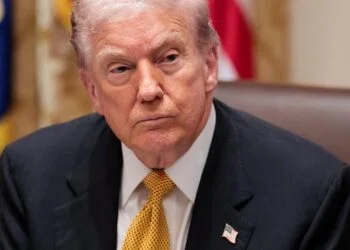
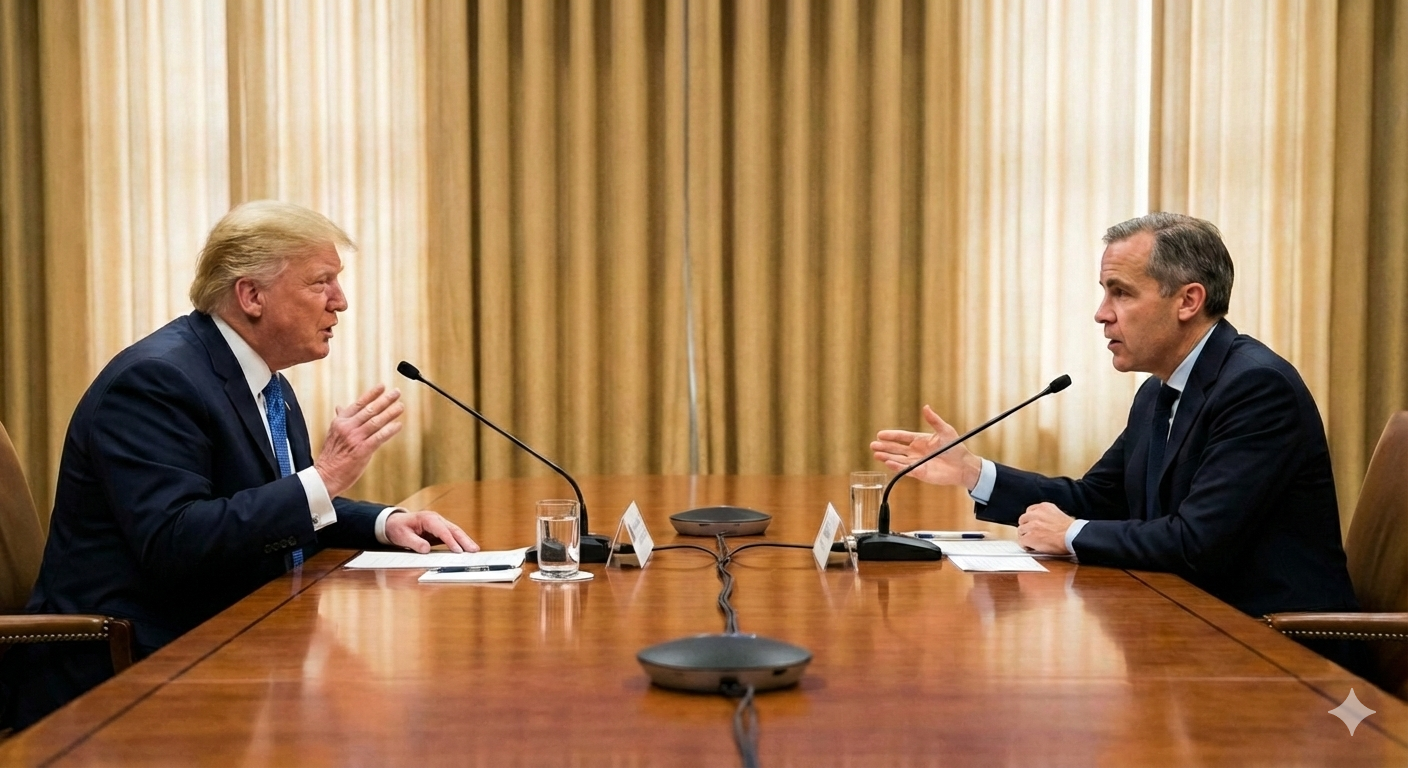
OTTAWA — Prime Minister Mark Carney says Canada has “no intention” of pursuing a free trade agreement with China, after U.S. President Donald Trump warned he would impose a 100 per cent tariff on all Canadian goods entering the United States if Canada “makes a deal with China.”
Carney told reporters in Ottawa that recent Canada-China moves are aimed at addressing specific trade irritants — including Chinese-made electric vehicles and disputes affecting agriculture and fish products — while keeping Canada aligned with obligations under the Canada-U.S.-Mexico Agreement.
Trump’s threat, delivered in a weekend social media post, did not define what he meant by a “deal.” In that post, Trump also referred to Carney as “Governor Carney,” a term he has used previously to belittle Canadian leaders, and argued Canada should not serve as a transit route for Chinese goods entering the U.S.
Tariff threat sharpens pressure on Canada-U.S. trade
Carney said Canada is not seeking a broad free-trade pact with China and emphasized the constraints embedded in North America’s existing trade framework. Under the Canada-U.S.-Mexico Agreement, any of the three countries must notify the others before pursuing a free trade agreement with a “non-market” country, such as China, Carney said.
“We have no intention of doing that with China or any other non-market economy,” Carney said as he headed into a Liberal caucus meeting on Parliament Hill.
Trump’s latest warning marked a shift in tone from his initial reaction to the recent Canada-China arrangement. When asked about that agreement last week, Trump told reporters at the White House it was a “good thing” for Canada to sign a trade deal, adding that if Canada could get a deal with China, it should do so. By Saturday, however, he was threatening broad, economy-wide tariffs on Canada if he believed Ottawa was moving closer to Beijing in ways that could affect U.S. markets.
In his weekend post, Trump argued Canada could become a “Drop Off Port” for China to send goods and products into the United States and said Canada would be “hit with a 100% Tariff” if it “makes a deal with China.” He also warned in sweeping terms that China could overwhelm Canada’s economy and society.
- Carney says Canada is not pursuing a free trade agreement with China.
- Trump threatens 100 per cent tariffs on all Canadian goods if Canada “makes a deal with China.”
- Ottawa says recent steps with China address specific trade issues and remain consistent with Canada’s commitments under the Canada-U.S.-Mexico Agreement.
The China arrangement at the centre of the dispute
Carney described the recent understanding with China as an effort to “rectify” problems that have accumulated over the past couple of years, pointing to contentious files including EVs and disputes over Canadian agricultural and fish products.
As outlined by the federal government’s recent approach, Canada reached an agreement with China to allow 49,000 Chinese electric vehicles into the Canadian market at a reduced tariff rate of 6.1 per cent, in exchange for China lowering tariffs on Canadian canola and other products. Carney characterized the move as a targeted effort to deal with immediate trade frictions — not a step toward a comprehensive free trade agreement.
Carney said the approach is consistent with Canada’s obligations under the Canada-U.S.-Mexico Agreement and that Canada respects those commitments. He framed the measures as limited and pragmatic — a way to stabilize specific trade lanes while preserving Canada’s wider trade posture in North America.
Kody Blois, Carney’s parliamentary secretary, argued Canada’s actions with China mirrored what he said Trump has done on a narrower basis: using sector-by-sector arrangements to reduce barriers without concluding an across-the-board agreement. Blois said the U.S. sought market access for American farmers, producers and the U.S. tech sector, and he described Canada’s approach as similarly focused on Canadian interests.
Background: Davos speech adds strain to a fraught relationship
The dispute over China is unfolding against a backdrop of growing tension between Ottawa and Washington following Carney’s speech at the World Economic Forum in Davos, Switzerland. In that address, Carney spoke about “American hegemony” and warned that “great powers” are using economic integration as “weapons,” urging “middle powers” to cooperate to protect their interests.
Trump criticized Carney’s remarks in his own speech and issued a pointed warning about Canada’s reliance on the United States, telling the prime minister to remember that “Canada lives because of the United States” the next time he made such statements.
Carney’s Davos message also had immediate diplomatic consequences. Trump withdrew Canada’s invitation to participate in his proposed “Board of Peace” initiative for Gaza, disinviting Carney in the days after the prime minister’s comments.
Foreign Affairs Minister Anita Anand said she did not expect Canada to be disinvited, but added that Canada’s policy toward the Middle East — including assisting Gaza — would continue. She also said she was not expressing concern about the state of Canada’s relationship with the United States even after Trump’s most recent tariff threat.
Trade diversification: Ottawa’s stated strategy
Anand said Canada’s broader goal is to protect and empower the Canadian economy through diversification, arguing the country cannot rely on a single partner. She said she will travel to the United States next week to discuss critical minerals with other countries, signalling that Ottawa intends to keep engaging Washington on core economic priorities even amid political turbulence.
In an interview, Anand described diversification as “fundamental” to Canada’s economic security and said it helps Canada meet its interests as a middle power. She pointed to existing cooperation with groups of countries on specific issues, including what she called a “coalition of the willing” on Ukraine. Anand also said she met with countries focused on Ukraine’s energy needs in the face of Russian strikes