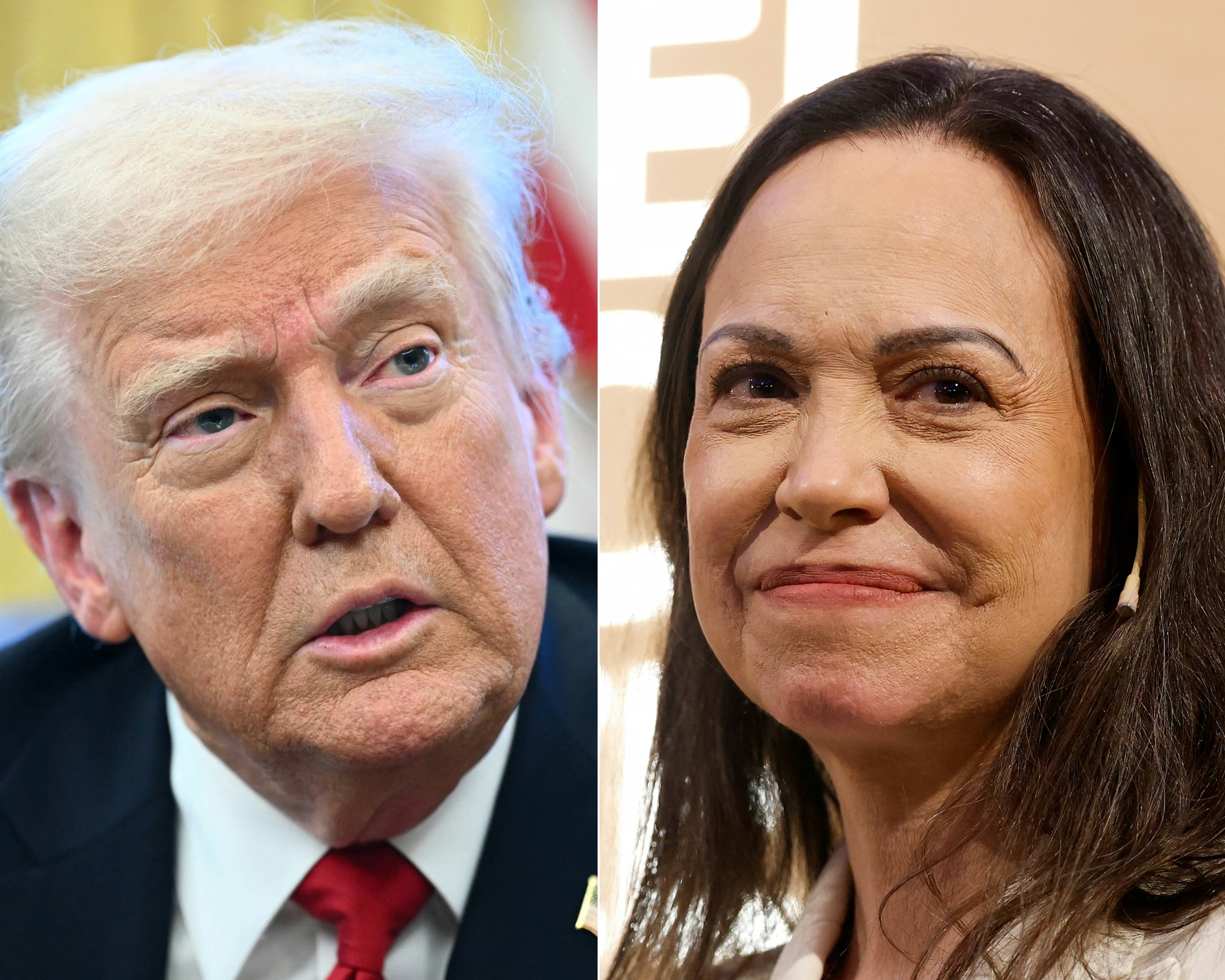
Venezuelan opposition leader María Corina Machado met President Donald Trump at the White House on Thursday, where she presented him with the Nobel Peace Prize medal she received in 2025, a symbolic gesture that drew attention as Washington weighs its approach to Venezuela’s unfolding political transition.
The meeting, the first between Trump and Machado, came days after the U.S. administration described a dramatic shift in Venezuela’s power structure following the capture of longtime leader Nicolás Maduro, an event that has left the country’s political direction unsettled and rival factions maneuvering for international recognition.
Machado, a leading figure in Venezuela’s opposition for more than a decade, offered the medal as a sign of appreciation for what she characterized as Trump’s support for democratic change in her country. Trump accepted the medal during the meeting and publicly praised the gesture, according to officials familiar with the exchange.
Nobel institutions have long maintained that while a medal may be physically transferred, the Nobel Peace Prize itself cannot be shared or reassigned, and the designation of laureate remains solely with the original recipient. Machado remains the only official Nobel Peace Prize winner for 2025.
Competing signals from Washington
The White House meeting took place against a backdrop of mixed signals from Washington. Trump has indicated a willingness to engage with Venezuela’s interim authorities, including figures who previously held senior roles under Maduro, while also expressing skepticism about Machado’s level of domestic support.
Those comments have complicated Machado’s effort to position herself as a central figure in any post-Maduro political arrangement. Her allies argue that international backing, particularly from the United States, will be critical in shaping a credible path toward elections and institutional reform.
A symbolic gesture with political weight
The decision to present the Nobel medal to Trump has generated debate within Venezuela’s fragmented opposition, where symbolism carries outsized weight and questions of legitimacy remain highly contested. Supporters describe the move as an attempt to strengthen ties with Washington at a pivotal moment. Critics see it as a risky overture that could alienate sectors of the opposition wary of U.S. influence or skeptical of Trump’s intentions.
Following the White House meeting, Machado continued her visit to Washington with meetings on Capitol Hill, seeking support for a political roadmap that would include guarantees for competitive elections and protections for opposition figures.
As Venezuela’s transition remains fluid, attention is now focused on whether the United States will articulate a clearer policy framework and whether Machado’s high-profile diplomacy will translate into tangible influence inside a country still grappling with the aftermath of years of political crisis.
Image Source: Guardian