
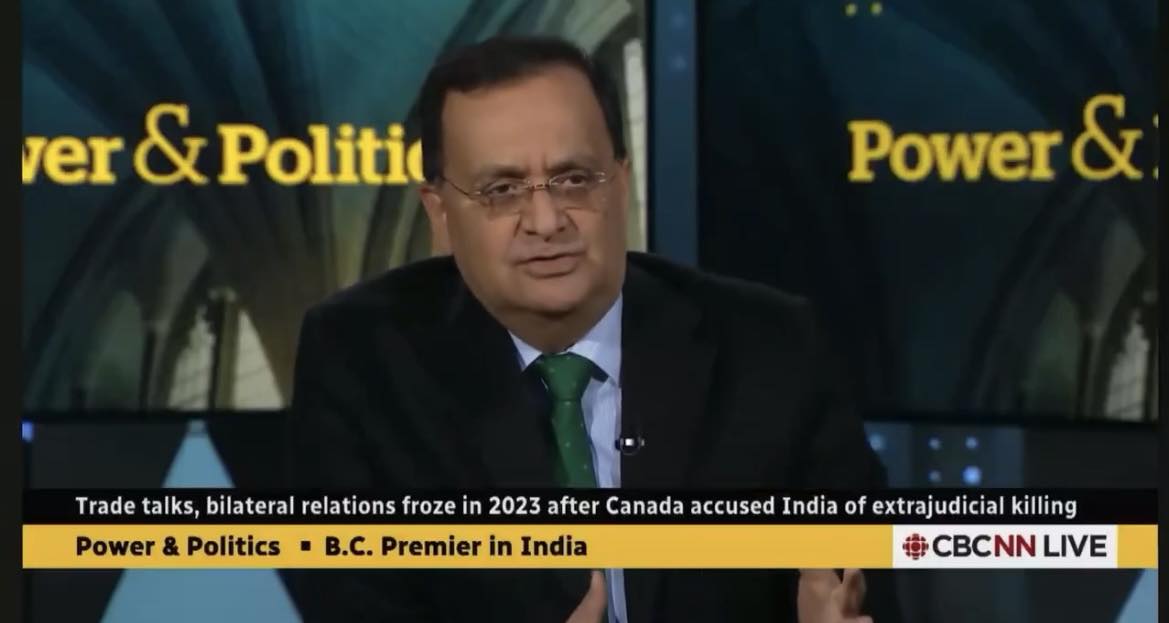
🇨🇦🇮🇳 Dinesh K. Patnaik, India’s High Commissioner to Canada, says Canada needs 60 million Indians and adds that he could help make it happen. pic.twitter.com/mnzc4ofHBz
— YEGWAVE (@yegwave) February 28, 2026
During recent remarks that have generated discussion online, Dinesh Patnaik, India’s High Commissioner to Canada, spoke about demographic and economic complementarities between Canada and India.
“You have things which we need, we have things which you need. I mean for example, simple example, you’re the second largest country in the world with a 40 million population. You need at least over a 100 million population. You need people to man many of your resources. We have the capacity. We have the intellect. We have the talent.”
In the video, Patnaik emphasized what he described as a mutually beneficial relationship between the two countries, highlighting Canada’s vast natural resources and India’s large, skilled, and youthful population.
While some social media users interpreted the remarks as a projection of large-scale migration, no formal policy announcement was made regarding specific population targets. Canada’s immigration levels are set annually through federal immigration planning and parliamentary processes.
Meanwhile, during the Canadian Prime Minister’s visit to India, the two countries launched 13 new agreements focused primarily on expanding educational collaboration, research partnerships, and student mobility.
India remains one of the largest sources of international students in Canada. Education partnerships are seen as a key pillar of bilateral ties, benefiting Canadian universities and colleges while offering Indian students global academic opportunities.
Supporters of deeper cooperation argue that expanded education pathways and skilled migration can help address Canada’s labor shortages in sectors such as technology, healthcare, construction, and natural resources. At the same time, India benefits from educational access, remittances, and global professional networks.
Officials from both countries have framed the relationship as a “win-win” partnership, built on shared democratic values, economic complementarities, and people-to-people connections.
As discussions continue, immigration and international education remain central themes in the evolving India–Canada relationship.