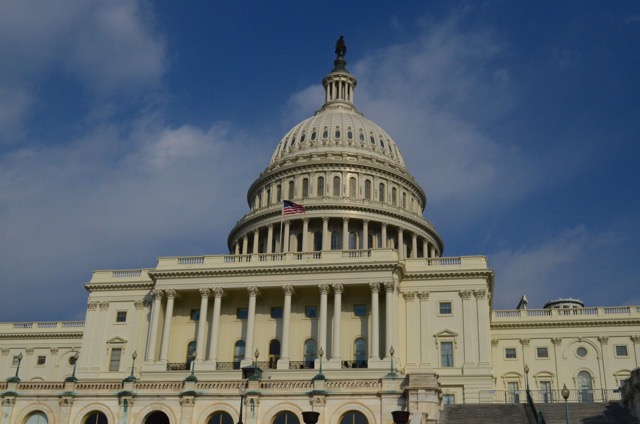
The U.S. Senate has once again blocked efforts to restrict former President Donald Trump’s ability to conduct military actions without congressional approval, this time regarding potential operations in Iran.
The Senate voted 53-47 against a bipartisan resolution that would have required President Trump to seek congressional authorization before engaging in military strikes against Iran. The vote largely followed party lines, with most Republicans opposing the measure.
“To begin with, no presidential administration has ever accepted the War Powers Act as constitutional – not Republican presidents, not Democratic presidents,” said Senator Marco Rubio, a Republican from Florida, emphasizing the ongoing dispute over the act’s authority.
How the Senate debated war powers in a tense climate
The resolution aimed to rein in what Democrats see as President Trump’s expanding unilateral military authority, particularly after recent U.S. and Israeli strikes against Iran and Iran’s retaliatory attacks in the region.
Democrats argued the president sidelined Congress and offered shifting justifications for military action. They pushed for a more robust check on executive power, citing concerns about stability in the Middle East and the potential for a prolonged conflict.
Most Republicans opposed the resolution, with some senators signaling a possible change of heart if the conflict escalates. Senator Susan Collins of Maine, a moderate Republican, said she voted against the resolution because it might send the wrong message to U.S. troops and Iran.
U.S. Defence Secretary Pete Hegseth warned the conflict could last up to eight weeks, nearly twice as long as President Trump initially suggested.
The debate highlighted the long-standing tensions between the executive branch and Congress over war-making powers, a dynamic with direct implications for Canadian foreign policy and security cooperation with the U.S.
Previous attempts to limit Trump’s military actions in the Americas
This is not the first time the Senate has considered war powers resolutions aimed at President Trump. Earlier this year, the chamber narrowly blocked a resolution that would have restricted his ability to launch further military operations against Venezuela without Congress’s prior approval.
That vote was tied 50-50, with Republican Senator JD Vance casting the deciding vote against the measure. Senators Josh Hawley and Todd Young, both Republicans, switched their positions after receiving “assurances” from the Trump administration regarding troop deployments and future authorizations.
Democratic leaders criticized the defeat as a setback for congressional oversight and warned it emboldened the president’s expansive use of military power without sufficient checks.
Tim Kaine, a Democratic senator from Virginia, said he would continue to propose additional war powers measures to hold the executive accountable.
Implications for Canada and its security relationship with the U.S.
Canada closely monitors U.S. foreign policy decisions, especially those involving military action, given the countries’ intertwined security interests and shared membership in NATO.
Any escalation of conflict in the Middle East involving Iran could have ripple effects on global energy markets and international security, affecting Canadian economic and diplomatic priorities.
Experts note that continued tension over congressional war powers in the U.S. may complicate allied coordination and decision-making in responding to international crises.