


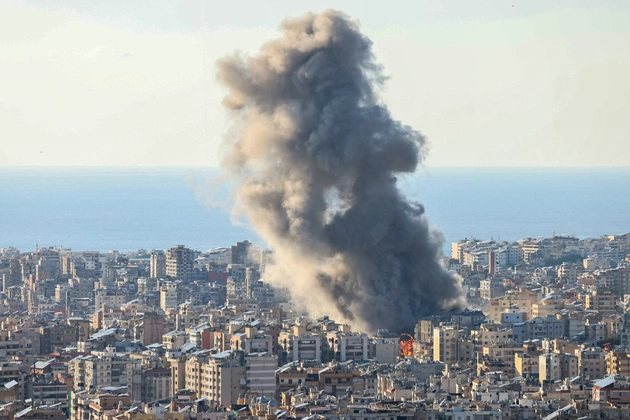
The U.S. and Israel have intensified military strikes against Iran, killing dozens of top Iranian officials, while President Donald Trump has not ruled out sending American ground troops into the country if necessary.
The escalating conflict has led to the closure of U.S. embassies in Saudi Arabia and Kuwait and heightened concerns about the broader impact on global energy markets and security in the Middle East. Trump’s administration faces criticism both domestically and internationally over its handling of the ongoing war and lack of a clear endgame.
“I don’t have the yips with respect to boots on the ground — like every president says, ‘There will be no boots on the ground.’ I don’t say it,” Trump said. “I say ‘probably don’t need them,’ [or] ‘if they were necessary.’”
Trump’s stance on military involvement in Iran
President Donald Trump defended the U.S airstrikes against Iran, which targeted military and nuclear sites, as part of a strategy to prevent Iran from developing nuclear weapons. Trump said the operation, dubbed Epic Fury, was progressing “way ahead of schedule” after killing 49 senior Iranian figures.
Despite his earlier campaign pledges to avoid “forever wars,” Trump suggested that U.S. ground troops could be deployed if necessary, without specifying any timeline for withdrawal.
At a Pentagon press conference, Secretary of War Pete Hegseth confirmed no troops are currently inside Iran but declined to rule out future deployments.
Trump said the decision to launch strikes was based on intelligence that Iran was covertly resuming nuclear enrichment at a previously unknown site.
Regional impact and diplomatic shifts
The conflict has expanded beyond Iran, with Iranian-backed militias in Lebanon and Israel exchanging attacks, and Iran launching retaliatory strikes on U.S. bases and Gulf states. The U.S. has closed its embassies in Saudi Arabia and Kuwait and urged Americans to leave the region.
South Korea evacuated dozens of nationals from Israel and Iran amid rising tensions. Meanwhile, global stock markets have reacted sharply, with oil prices surging more than 8 percent over concerns about disruptions to energy supplies.
Canadian officials have expressed concern over the escalating conflict’s potential effects on energy prices and security. Canada imports much of its oil from the Middle East and closely monitors geopolitical developments that could affect global markets.
Criticism and uncertainty about the war’s direction
The Trump administration faces criticism from both political opponents and supporters who question the rationale for the war and the absence of a clear plan for ending the conflict.
Erik Prince, a longtime Trump ally and private security contractor, called the war a “significant can of worms” that could lead to chaos and destruction in Iran, expressing disappointment that the conflict seems inconsistent with Trump’s “Make America Great Again” promises.
Other conservative commentators and influencers have voiced skepticism about the war. Meanwhile, Secretary of State Marco Rubio promised a more “punishing” next phase of attacks against Iran, citing an “imminent threat” to the U.S.
Israeli Prime Minister Benjamin Netanyahu defended the strikes, warning that Iran was close to making its ballistic missile and nuclear programs “immune” from attack within months.
The criticism was immediate, with prominent voices weighing in:













Hope the war is over soon.