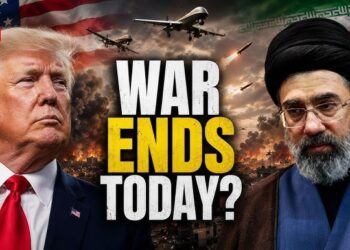
US President Donald Trump has rejected Iran’s latest peace proposal to end the ongoing war, calling the response “totally unacceptable”.
Summary of the latest diplomatic developments
The conflict between the US, Israel, and Iran has entered its 73rd day with no clear resolution in sight. Tehran’s response to a US peace offer included demands for an immediate cessation of hostilities on all fronts, the lifting of the US naval blockade on Iranian ports, compensation for war damages, and guarantees against further attacks. Iran also insisted on maintaining sovereignty over the Strait of Hormuz, a strategically vital waterway through which roughly 20% of the world’s oil and liquefied natural gas passes.
President Trump dismissed the Iranian reply without specifying reasons, stating on his social media platform Truth Social that he found the response “totally unacceptable”. The US proposal, according to unnamed officials cited by Axios, included suspending Iran’s nuclear enrichment programme, lifting sanctions, and ensuring free passage through the Strait of Hormuz, contingent on a final agreement.
Israeli Prime Minister Benjamin Netanyahu weighed in during an interview, emphasising the need to dismantle Iran’s uranium enrichment sites before any war termination could be considered.
Iranian state media labelled the US plan as an attempt at “Iran’s surrender to Trump’s greed”, reflecting Tehran’s stance that the American demands remain unreasonable.
The situation remains tense around the Strait of Hormuz, where Iran has continued to block maritime traffic, causing oil prices to rise sharply. The US has enforced a naval blockade on Iranian ports, further escalating tensions.
The following tweet from President Trump on Truth Social highlights his firm rejection of Iran’s response. Trump’s direct statement underlines the stark diplomatic impasse:
Context and ongoing military developments
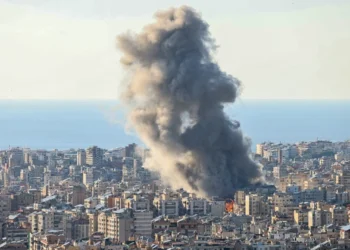
The war, launched by US and Israeli forces on 28 February, has seen a ceasefire largely observed since last month, despite sporadic exchanges of fire. The conflict has had a significant impact on regional security, particularly in Lebanon, where Israeli air raids have targeted towns such as Kfar Tebnit and Choukine.
In one recent incident, two Lebanese medics and a civilian were killed in Israeli attacks on emergency response centres in Bint Jbeil. The Israeli military also confirmed the death of an army driver near the Lebanese border.
Meanwhile, Iran executed Erfan Shakourzadeh, a 29-year-old convicted of spying for US and Israeli intelligence, according to Iran’s judiciary. Shakourzadeh was alleged to have shared classified scientific information linked to satellite programmes.
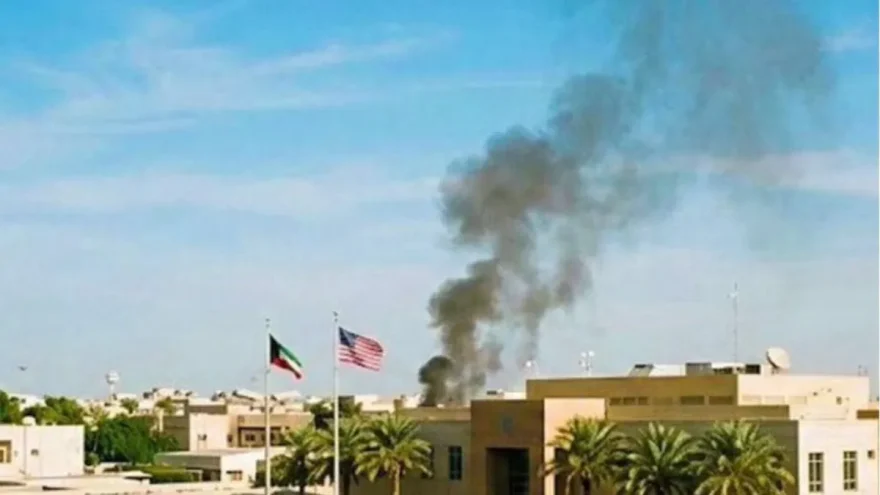
In the Gulf region, several countries have reported hostile drone activity attributed to Iran, including the United Arab Emirates, Qatar, and Kuwait, raising further security concerns.
Economic impact and international reactions
The ongoing conflict has significant global economic repercussions. Oil prices have surged, with Brent crude rising above $104 a barrel after the latest diplomatic setback. The Strait of Hormuz remains a critical chokepoint, with tanker traffic reduced to a trickle compared to pre-war levels.
Shipping data indicate that some tankers have attempted to transit the strait with their tracking systems switched off, a tactic intended to avoid Iranian attacks.
European Union foreign ministers convened in Brussels to discuss the war on Iran alongside the ongoing conflict in Ukraine, reflecting the broader geopolitical challenges facing the bloc.
President Trump is scheduled to meet Chinese President Xi Jinping in Beijing, with the Iran war expected to be a key topic during the discussions.
Domestic political considerations
Public opinion in the United States is increasingly critical of the war, with polls showing widespread unpopularity. Rising petrol prices have compounded concerns ahead of the midterm Congressional elections, which will determine whether the Republican Party retains control.
Israeli Prime Minister Netanyahu has also expressed a desire to reduce American financial support for Israel’s military, currently at $3.8 billion annually, signalling internal debates over the scope and cost of the conflict.
Background to the conflict
The war began on 28 February 2026 when Israeli and US forces launched coordinated air strikes against multiple targets in Iran. The conflict was triggered by concerns over Iran’s nuclear programme and its military activities in the region.
Since then, the war has expanded to involve proxy conflicts in Lebanon and increased naval confrontations in the Gulf. The US blockade of Iranian ports and Iran’s subsequent closure of the Strait of Hormuz have been central flashpoints in the conflict.
Efforts at diplomacy, including ceasefire agreements and peace proposals, have so far failed to produce a breakthrough, with both sides accusing each other of making unreasonable demands.