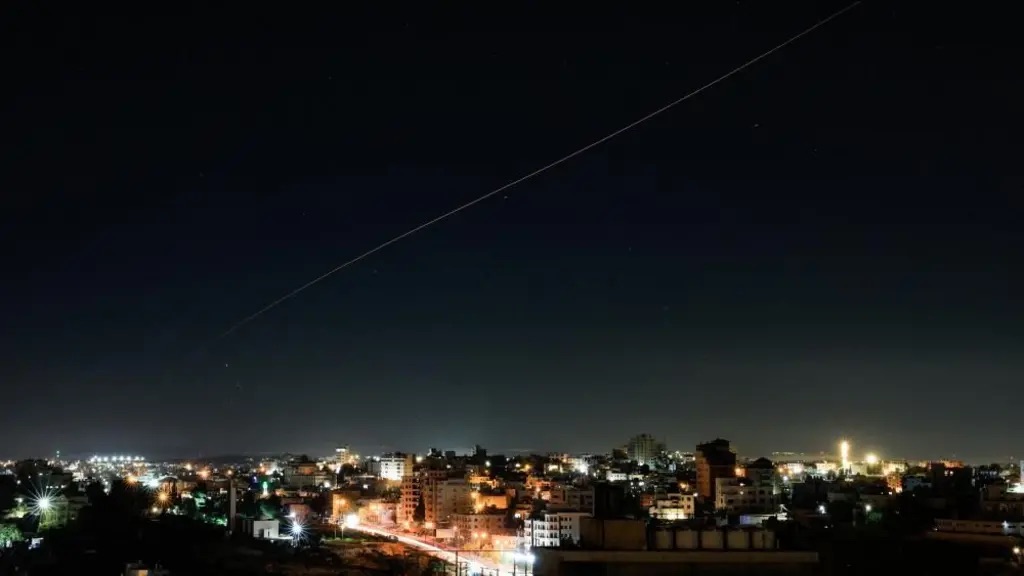
Iran has fired multiple waves of missiles towards northern Israel, marking the first such attack since the ceasefire agreed in April, according to official statements.
The Islamic Revolutionary Guard Corps (IRGC) of Iran announced the missile launches as “the beginning of a full week of continuous strikes”. Israeli authorities stated that most missiles were intercepted and no injuries have been reported so far.
Earlier on the same day, Israel carried out airstrikes on Hezbollah targets in southern Beirut, Lebanon’s capital. The strike prompted threats of retaliation from Iran, heightening tensions in the region.
Effie Defrin, a spokesperson for the Israel Defense Forces (IDF), said Iran had made a “grave mistake” and emphasised that Israel was prepared for further missile attacks. He confirmed that air defence systems were deployed nationwide and that the IDF chief of general staff was conducting a situational assessment.
Defrin added that the Israeli military intends to intensify operations against Hezbollah, the Lebanese Shia militant group backed by Iran. “We will continue to operate throughout Lebanon and deepen the blow to the Hezbollah terrorist organisation,” he said.
The United States, which supports Israel, urged Iran to return to diplomatic negotiations. President Donald Trump told Fox News that the missile strikes were “certainly not going to help” efforts to end the conflict and called on Tehran to “get back to the table and make a deal.” He also expressed dissatisfaction with Israel’s attack in Beirut, reportedly advising Israel against retaliating further.
The US Embassy in Jerusalem issued instructions for staff and their families to remain in shelter and be ready to move to protected areas in the event of a missile alert.
The recent escalation comes amid a protracted conflict that has lasted more than 100 days, involving Israel, Iran, Hezbollah, and their proxies. The April ceasefire, brokered by international parties, had temporarily quelled hostilities but failed to resolve underlying tensions.
Israeli Prime Minister Benjamin Netanyahu authorised recent strikes on southern Beirut, citing Hezbollah’s attacks on northern Israeli communities. Tehran had warned of retaliatory measures should Israel continue its military operations in Lebanon.
The Israeli military chief Eyal Zamir is reportedly reviewing ongoing operations and approving plans for their continuation, signalling that Israel is preparing for a sustained campaign if necessary.
The tension and violence have drawn international concern over the risk of a wider regional conflict, given the involvement of multiple state and non-state actors and the strategic importance of Lebanon and Israel.
The following video shows missile interceptions over northern Israel, illustrating the intensity of the current missile exchanges.
Social media reactions have highlighted the sequence of events leading to the missile launches. The user sarah contextualised the Iranian strikes as a response to Israeli attacks on Beirut, underscoring the ongoing cycle of retaliation.
BREAKING:
Iran is striking Israel after Israel attacked civilian areas in Beirut, Lebanon’s capital, earlier today.
Not out of nowhere.
Not without warning.Iran warned that an attack on Beirut would trigger a response.
Israel bombed Beirut anyway
Now that response has begun pic.twitter.com/AWR147d38h
— sarah (@sahouraxo) June 7, 2026