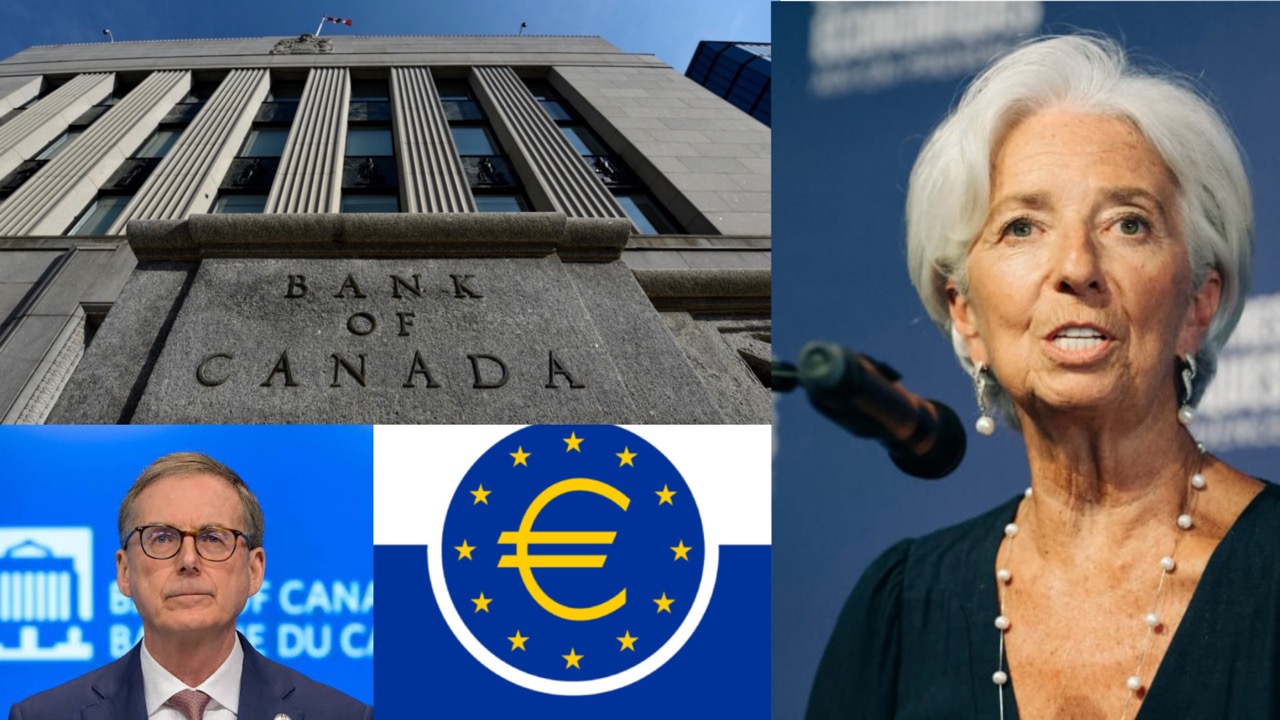
The European Central Bank (ECB) raised its key interest rates by 25 basis points on June 11, 2026, marking the first increase since 2023 amid rising inflation pressures fueled by the Iran conflict, while concerns grow over whether the Bank of Canada will follow suit amid a complex economic environment marked by stagflation and geopolitical risks.
ECB Raises Interest Rates Amid Geopolitical and Inflation Pressures
The ECB increased all three of its main rates by 25 basis points: the deposit facility rate to 2.25%, the refinancing rate to 2.40%, and the marginal lending rate to 2.65%. This is the first hike in nearly three years, reversing a prolonged easing cycle that began amid earlier economic headwinds.
ECB President Christine Lagarde cited the ongoing Iran war as a key driver behind the decision, noting that the resulting energy shock is spreading across all sectors of the eurozone economy. She emphasized that the increase was a response to current inflationary pressures rather than a preemptive move, warning that energy costs will remain elevated through summer and well into the first half of 2027.
Lagarde stated: “The outlook remains uncertain, with upside risks for inflation and downside risks for economic growth. Rising energy prices will further increase inflation, keeping it significantly above our target in the near term.”
The European Central Bank hikes interest rates for the first time in almost three years https://t.co/GLvvkqkr5p
— Bloomberg (@business) June 11, 2026
🇪🇺 ECB BECOMES THE FIRST MAJOR G7 CENTRAL BANK TO RAISE INTEREST RATES
Deposit facility hiked to 2.25%, refinancing rate to 2.40%, and marginal lending to 2.65%.
The Iran war has pushed euro area inflation above 3%, forcing the ECB to reverse nearly two years of rate cuts. pic.twitter.com/bm7cgOBqGp
— Coin Bureau (@coinbureau) June 11, 2026
Implications for the Eurozone Economy and Inflation
The ECB’s move to hike rates reflects persistent inflationary pressures in the euro area, with inflation recently climbing above 3%, reversing nearly two years of accommodative monetary policy. The central bank’s decision aims to address the direct and indirect costs of the energy shock, which have fed through to consumer prices and production costs.
Market analysts have noted that the ECB is the first major G7 central bank to increase rates this year, signaling a potential shift in global monetary policy amid ongoing geopolitical tensions and energy market volatility. The tightening cycle could weigh on economic growth prospects, which the ECB acknowledges remain fragile.
Will the Bank of Canada Follow? The Stagflationary Illusion
Canada faces a complex economic scenario described as a “stagflationary illusion,” where short-term growth indicators mask deeper structural weaknesses. The ongoing Iran war has pushed global energy and transportation costs higher, sustaining inflation above target levels and forcing the Bank of Canada to consider raising interest rates despite a technical recession.
Statistics Canada data confirms two consecutive quarters of negative annualized growth, yet headline job numbers remain robust due to temporary employment boosts in service, hospitality, and construction sectors linked to the FIFA World Cup. This transient stimulus obscures collapsing corporate investment, declining productivity, and falling real per-capita GDP.
Economic observers warn that the Bank of Canada faces difficult choices as the temporary FIFA-driven demand fades and structural challenges intensify, notably if the United States abandons the Canada-United States-Mexico Agreement (CUSMA) in favor of bilateral trade deals, isolating Canada from Mexico and undermining North American trade integration.
Alternative Future Scenarios for Canada’s Economy
- Scenario 1: The “Energy Boom” Bifurcation – An intensified Iran war pushes oil prices above $120 per barrel. Canada’s energy sector surges, benefiting wealthy provinces and top earners, but the broader population suffers from soaring living costs. The Bank of Canada enacts aggressive rate hikes, deepening localized recessions in housing and retail.
- Scenario 2: The “Bilateral Fortress” Pivot – CUSMA dissolves, forcing Canada into a restrictive bilateral trade deal with the US that limits global trade options. Stabilization of Ontario and Quebec manufacturing occurs, but resource sectors falter, leading to a prolonged decade of low growth and productivity.
- Scenario 3: The “Post-FIFA” Hard Landing – A diplomatic resolution ends the Iran war, causing oil prices to collapse just as FIFA-related economic activity ends. Job losses mount and recession deepens. With weakened trade agreements, Canada faces a severe balance-sheet crisis, prompting emergency monetary easing to prevent systemic collapse.
“The energy shock is spreading across all sectors of the economy, creating clear direct costs as well as already emerging indirect costs,” ECB President Christine Lagarde said at the Frankfurt press conference.
These scenarios highlight the fragility of Canada’s economic outlook amid external shocks and internal structural shifts, raising the question of how aggressively the Bank of Canada will act in response to persistent inflation and geopolitical risks.