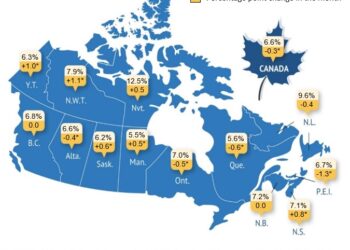

Canada’s annual inflation rate rose to 3.2% in May, driven mainly by surging gasoline and fresh produce prices, according to Statistics Canada.
Inflation pressures intensify in May
Statistics Canada reported that gasoline prices increased by 33.2% year over year in May, up from 28.6% in April. This acceleration was the main factor pushing inflation to its highest level since late 2023. The rise in fuel costs is linked to ongoing oil supply disruptions caused by the war in Iran, which has constrained global oil markets.
Food prices also significantly contributed to the inflation uptick. The cost of fresh vegetables rose by 9%, with tomatoes alone jumping 45.2%, attributed to poor weather and reduced planting in Mexico. Fresh fruit prices increased by 5.3%, adding further pressure to grocery bills.
Excluding gasoline, the consumer price index (CPI) still rose by 2.2% in May, compared to 2% in April. This increase was largely driven by food, recreation, and alcoholic beverages. Shelter costs grew more slowly at 1.7%, which helped moderate the overall rise.
Other sectors saw mixed price movements. Computer equipment prices climbed 3.9%, influenced by increased demand for memory components like RAM and solid-state drives, partly due to growth in artificial intelligence data centres. Meanwhile, prices for passenger vehicles and household tools rose at a slower rate.
Will the Bank of Canada respond with rate hikes?
Economists are debating whether the rising inflation will compel the Bank of Canada to raise interest rates further. BMO chief economist Doug Porter said that although gasoline prices pushed inflation higher in May, recent easing at the pump might lower the headline inflation rate in coming months.
Abby Xu, an economist with RBC, noted that core inflation measures, which exclude volatile items like food and energy, remain close to the Bank of Canada’s two per cent target. She suggested that despite rapid increases in food and energy prices, price growth in other categories remains subdued.
Porter cautioned that sustained high energy and food prices could risk prolonging inflationary pressures, potentially influencing monetary policy decisions. The Bank of Canada typically adjusts interest rates to control inflation; higher rates generally reduce spending and borrowing, helping to cool price rises.
The Bank of Canada’s next policy announcement is highly anticipated, with market watchers closely monitoring inflation data and global energy developments for clues on future moves.
The following tweet from BMO’s Doug Porter summarises his view on inflation trends and monetary policy implications:
Context and wider implications
Inflation has been a persistent challenge for Canada since 2022, driven initially by pandemic-related supply disruptions and surging demand. Energy prices have fluctuated sharply due to geopolitical tensions, particularly the conflict in Iran, which has restricted oil exports.
Food inflation has also been volatile, affected by weather events, supply chain issues, and higher transportation costs. The large jump in tomato prices is a notable example of how climatic factors abroad can ripple through Canadian grocery bills.
Consumers have felt the pinch in everyday expenses, from filling their vehicles to purchasing fresh produce. While some sectors see slower price growth, the overall cost of living remains elevated compared to pre-pandemic levels.
Monetary policy authorities face a delicate balancing act. Raising interest rates too aggressively risks slowing economic growth or triggering a recession, while insufficient action could allow inflation to become entrenched.
The Bank of Canada has raised rates multiple times since 2022, aiming to bring inflation back to its two per cent target. Recent inflation data will be critical in shaping its next steps.
Reactions from industry and consumers
Consumer groups have expressed concern over rising grocery costs, warning that sustained food inflation could strain household budgets, particularly for lower-income Canadians.
Industry analysts also highlight the role of global supply chain disruptions and energy market volatility as key factors beyond domestic policy control.
Some economists urge caution, emphasising that core inflation remains stable and that recent easing in gasoline prices could alleviate some cost pressures soon.
Others point to the risk that prolonged supply constraints and geopolitical uncertainty may keep inflation elevated, necessitating further monetary tightening.