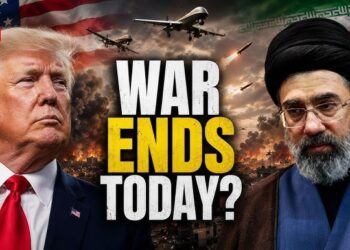
President Donald Trump has said that Iranian leaders remain unwilling to sign a peace deal because they are “strong” and “proud,” despite ongoing negotiations to end the conflict that began four months ago.
In an interview with NBC News on 5 June, Mr Trump said Iran had no choice but to eventually agree to a settlement, but cautioned that the process would take time given the long history of hostility between the two nations.
Trump on Iran negotiations and military operations
Speaking from Chippewa Falls, Wisconsin, Mr Trump said: “They’re strong, they’re proud, there are things they never thought they’d be doing that they’re going to have to do. They’ve got no choice, and it takes a little while.” The ongoing conflict has seen multiple ceasefire extensions since an initial agreement in April.
The president also noted that the United States had “totally destroyed” much of Iran’s military capabilities, including missile factories and drone production facilities. However, he acknowledged that Iran still retained some missiles and drones, estimating around 21-22% of their missile arsenal remained operational.
Meanwhile, Secretary of State Marco Rubio informed House lawmakers that the latest military operation, dubbed “Operation Epic Fury,” had concluded. He described recent US strikes as defensive responses to Iranian attacks on shipping near the Strait of Hormuz, a vital oil transit route.
Mr Rubio said, “In order to protect our own forces, we don’t just strike the drones, we strike the people who launch those drones. These are completely defensive in nature, but they are happening in response to an Iranian action.” The strait’s partial closure by Iran has contributed to rising global oil prices and increased fuel costs in the United States.
Mr Trump criticised calls for a swift deal to end the conflict, highlighting the complexity of the situation. “It takes years to do these things,” he said, referencing the nearly five decades of hostilities between the US and Iran.
He compared the current conflict’s duration of just three months with the 19-year Vietnam War, noting the impatience expressed by critics. “If I were a Democrat, nobody would be talking that way,” he added.
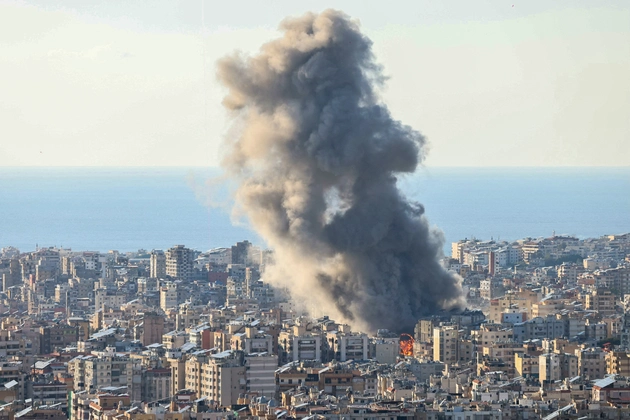
Iran demonstrated its remaining military capabilities earlier this week by launching attacks across the Persian Gulf, including a strike on Kuwait International Airport.
Trump’s critique of the Obama-era nuclear deal
Mr Trump reiterated his longstanding condemnation of the 2015 Iran nuclear deal, known as the Joint Comprehensive Plan of Action (JCPOA), which he withdrew the US from in 2018. He described the agreement as “horrible” and claimed it was tantamount to giving Iran a nuclear weapon.
He argued that previous US administrations exhibited “weak and ineffective leadership” that allowed Iran to advance its nuclear ambitions unchecked. Mr Trump said the deal should have been renegotiated earlier during his presidency but defended his approach by saying, “It takes years to do these things.” He also claimed the JCPOA would have “expired long ago,” despite many of its provisions being longer-term.
National security experts have disputed Mr Trump’s characterisation of the JCPOA. Ernest Moniz, US energy secretary during the Obama administration, told CNBC that the deal succeeded in limiting Iran’s nuclear activities and enabling effective monitoring. He said current conditions appear “far less favourable than they were a decade ago.” Mr Moniz expressed hope for a positive outcome but remained sceptical about the prospects.
Mr Trump has claimed repeatedly that had the US remained party to the JCPOA, Iran would have already acquired nuclear weapons. However, since the US withdrawal, Tehran has breached the deal’s limits on uranium enrichment and reduced transparency.
Mr Trump also promised on social media that any new agreement would be “far better” than the previous deal and would be concluded “relatively quickly.”
The president’s comments on the previous nuclear deal and ongoing negotiations were summarized in a recent Truth Social post, capturing his confidence in his administration’s strategy.
[TWEET_EMBED_1]
Context and international implications
The Iran war and stalled negotiations have wider geopolitical consequences. The Strait of Hormuz remains a flashpoint due to its strategic importance in global oil transportation, with Iran’s occasional closure or threats to close it provoking regional and international concern.
Economic effects have been felt worldwide, notably in higher oil prices and inflationary pressures in the United States. Pressure is mounting on the US administration to find a resolution that stabilises the region and reduces costs at the pump for American consumers.
Both Washington and Tehran have engaged in periodic ceasefire extensions, but recent attacks and counterattacks near the Persian Gulf underscore the fragility of the situation.
Efforts to reach a comprehensive peace agreement remain complicated by deep mistrust, historical grievances, and conflicting strategic interests.
Reactions and perspectives
Mr Trump’s assertions have elicited varied responses. Supporters praise his hardline stance on Iran and his criticism of the JCPOA, viewing his approach as a necessary course correction.
Critics argue that withdrawing from the JCPOA has weakened US leverage and allowed Iran to expand its nuclear programme, complicating prospects for peace. Experts caution that the current situation leaves the US in a less favourable position than under the previous agreement.
Analysts note that the conflict’s duration and intensity may continue to test US foreign policy and domestic political pressures, especially as economic impacts deepen.
Background: The Iran nuclear deal and its aftermath
The JCPOA was signed in 2015 between Iran, the US, and other world powers to curb Iran’s nuclear programme in exchange for sanctions relief. It included limits on uranium enrichment levels and extensive inspections to verify compliance.
President Trump withdrew the US in 2018, citing the deal’s shortcomings and Iran’s continued destabilising activities. Since then, Iran has breached several nuclear restrictions, escalating tensions.
The current conflict, which began in early 2026, has involved military strikes, drone attacks, and naval confrontations, particularly around the Persian Gulf and Strait of Hormuz.
Despite intermittent ceasefires and ongoing negotiations, a comprehensive peace deal remains elusive, with both sides maintaining firm positions.